Why mills need careful surveying
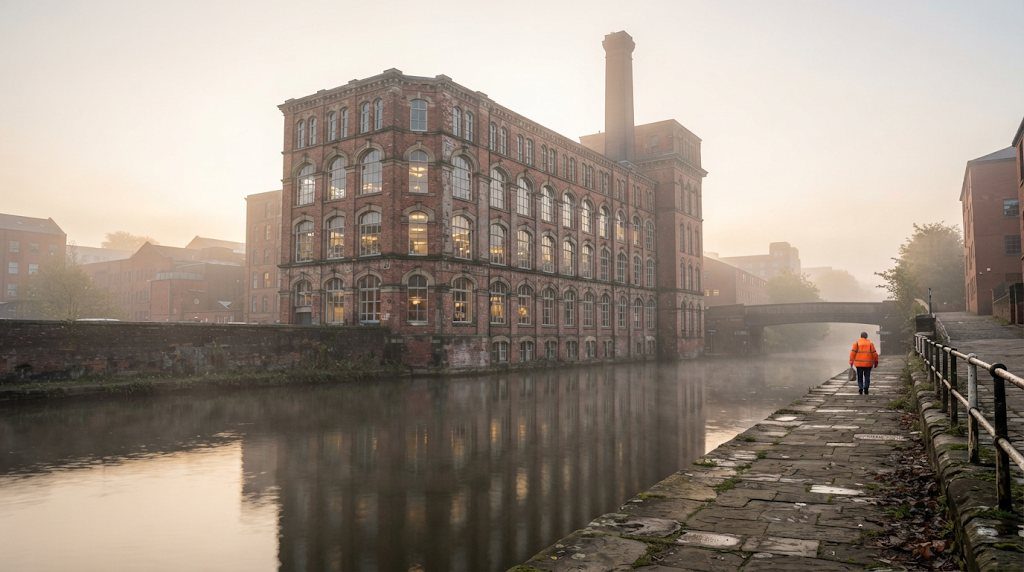
A mill built in the nineteenth century would not have been built with asbestos, but it very likely acquired some during twentieth-century repairs. Boiler houses and engine rooms were lagged, roofs were patched or replaced with asbestos cement sheets, weaving sheds got new roof coverings, offices were partitioned with insulating board, and later textile use added plant, flues and floor finishes. By the time a mill is converted to flats or offices, it may have a layered history of materials that need identifying one by one.
Large floor areas, high ceilings, hidden voids between floors, extensive pipework and sometimes derelict areas make mill surveys slower than a normal building of the same footprint, so scoping matters.
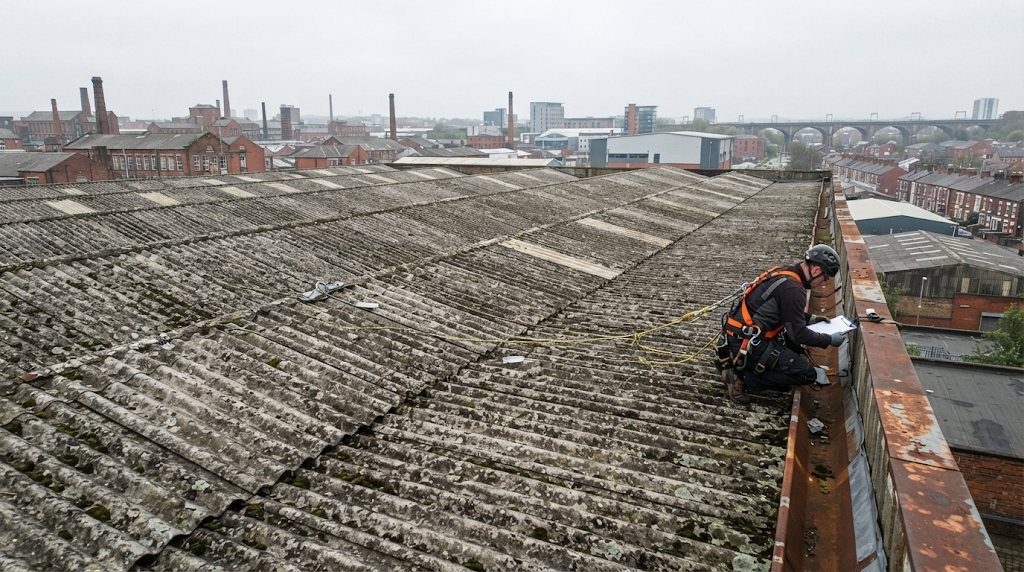
Mills in Bolton, Oldham, Rochdale, Blackburn, Burnley and Preston are in very different states: converted, part-let or empty. The survey approach differs, so tell us which applies.
Conversions and refurbishment
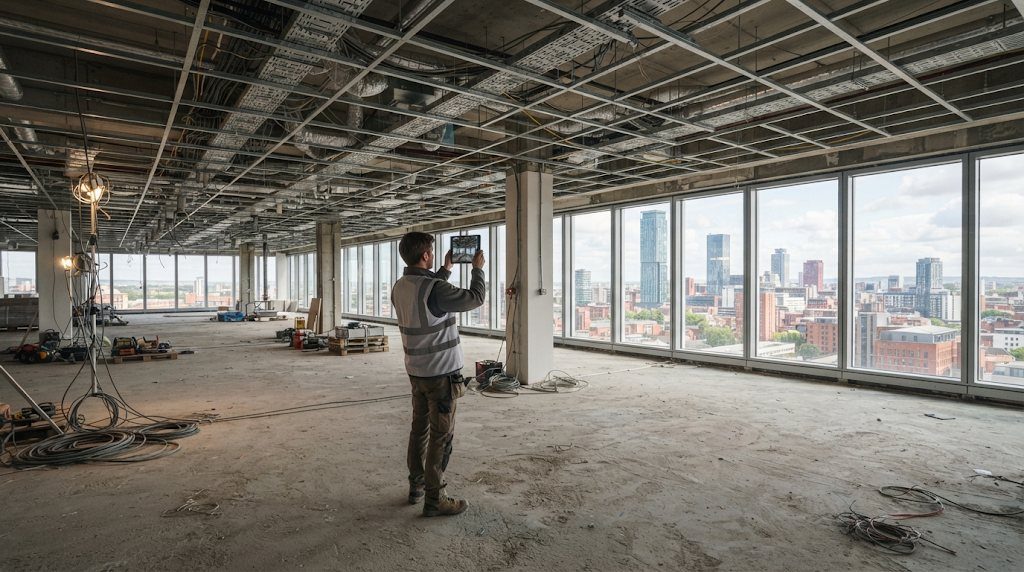
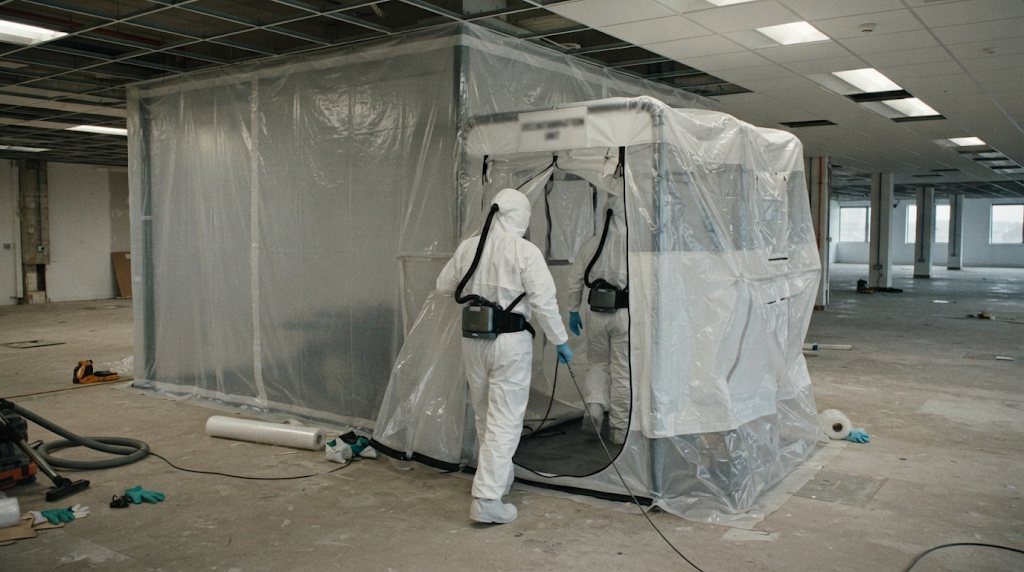
Before conversion, strip-out or demolition, a refurbishment and demolition survey is required for the areas affected. Because the work usually reaches most of the building, the survey is normally comprehensive and fully intrusive. It should be completed early in the project, because the results influence cost, programme and design. Some of the largest discoveries, such as asbestos cement roofs and old insulating board partitions, can run to substantial quantities.
Listed or locally important mills can add constraints on what can be opened up, so tell the surveyor if the building is protected so that the approach can be agreed in advance.
Occupied and converted mills
Many mills are still in commercial use, split into units for small businesses, workshops, studios and storage. The duty to manage applies, with the landlord usually responsible for the structure and common parts. Converted residential mills have shared areas, plant rooms and roofs that also fall under the duty to manage. A management survey and register is the baseline, with regular re-inspection.
If you are buying or lending against a mill, asking for an existing asbestos register is a standard step in due diligence. Where there is none, a survey before exchange avoids nasty surprises.
Tell us about the building
On the form, tell us the postcode, approximate floor area, number of floors, current use, and whether works are planned. Photographs of the roof, boiler house and any damaged areas help the surveyor decide how long the visit will take and what access is needed.